
Arcade Paradise is available on Steam, Switch, PS4/PS5, and XBox One, among other platforms
I picked up Arcade Paradise a weekend ago in the spirit of DeSIMber.
( The original plan was to dive face-first into Elite Dangerous‘ splendid space-travel simulation, but that plan hinged somewhat on refreshing my throttle setup, and that plan hinged on picking one up locally, and that plan hinged on me not catching the Coronavirus that’s definitely still running rampant, and and and. )
Anyway, Arcade Paradise came to me directly from a friend of about a decade now. And, it turns out, they were spot-on, because effective recommendation is contingent on properly knowing the person you’re trying to match to a specific experience.
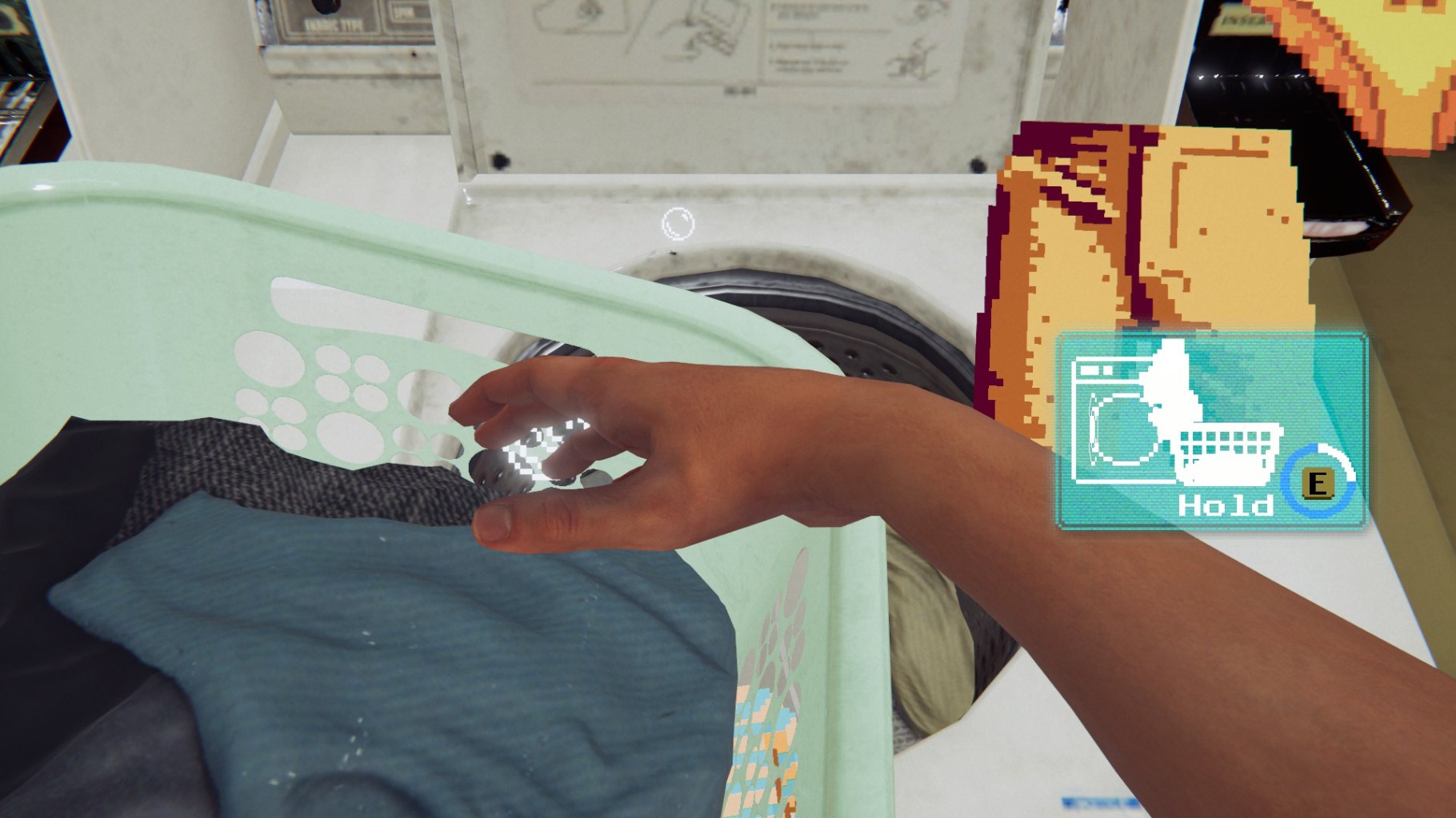
They were so spot-on, in fact, that Arcade Paradise was my main squeeze for that whole weekend. It had me slingin’ tokens, sure, but that’s the obvious bit. I was equally and absolutely delighted by its insistence of gamifying the “chores” of laundry and tidying up rubbish – two things that unironically bring me catharsis, because I’m either entirely too persnickety or straddle the line to being an old fogey.
It worked, and worked but good. As much as I can get tripped up by, say, the timer coordination and soil statistics of Rune Factory, making the daily to-dos more active had me physically juggling them in a very tactile way. It’s just primally satisfying to definitively cross toilet maintenance off the to-do list, with a hit-the-weak-point minigame, you know?
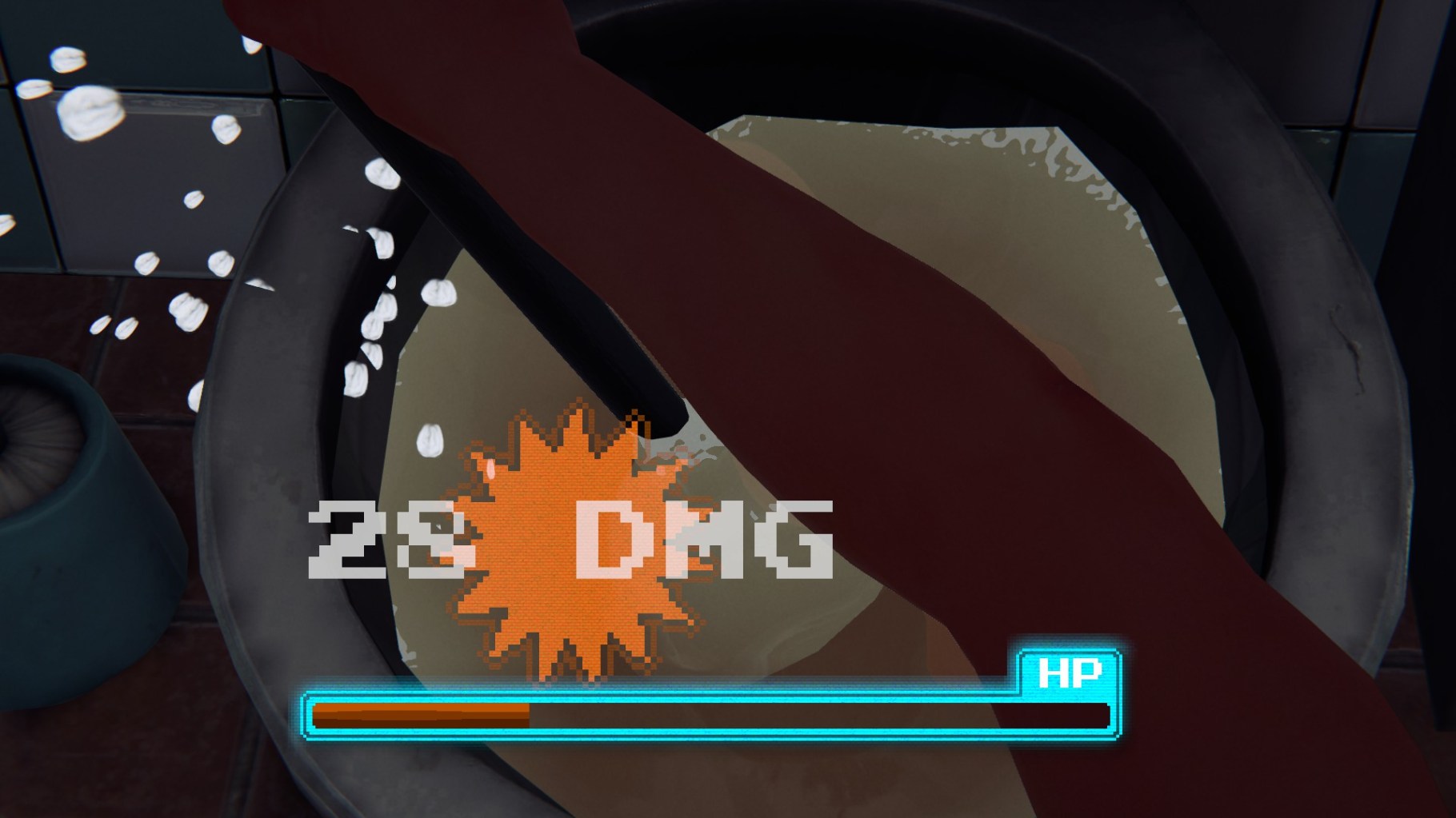
It’s such a great hook, in fact, that Arcade Paradise devoured a dozen hours’ worth of my time in two days. That kind of play density just doesn’t happen for me nowadays outside of a progression-heavy RPG, and rarely even then.
Yet I’ve barely picked it up in the last five days.
Arcade Takeover
The thing about Arcade Paradise is that it romanticizes the idea of running an arcade in the mid-1990s, from the distinct black-and-neon floor to the chunky little PDA that serves as your pause menu.
Part of this fantasy is being able to play video games on the clock, which, of course. Idyllic wish-fulfilment is part and parcel to oh-so-many of these life sims, why shouldn’t an arcade manager lean in? Especially when, to its credit, the bespoke playable arcade games within Arcade Paradise are genuinely delightful little creations.
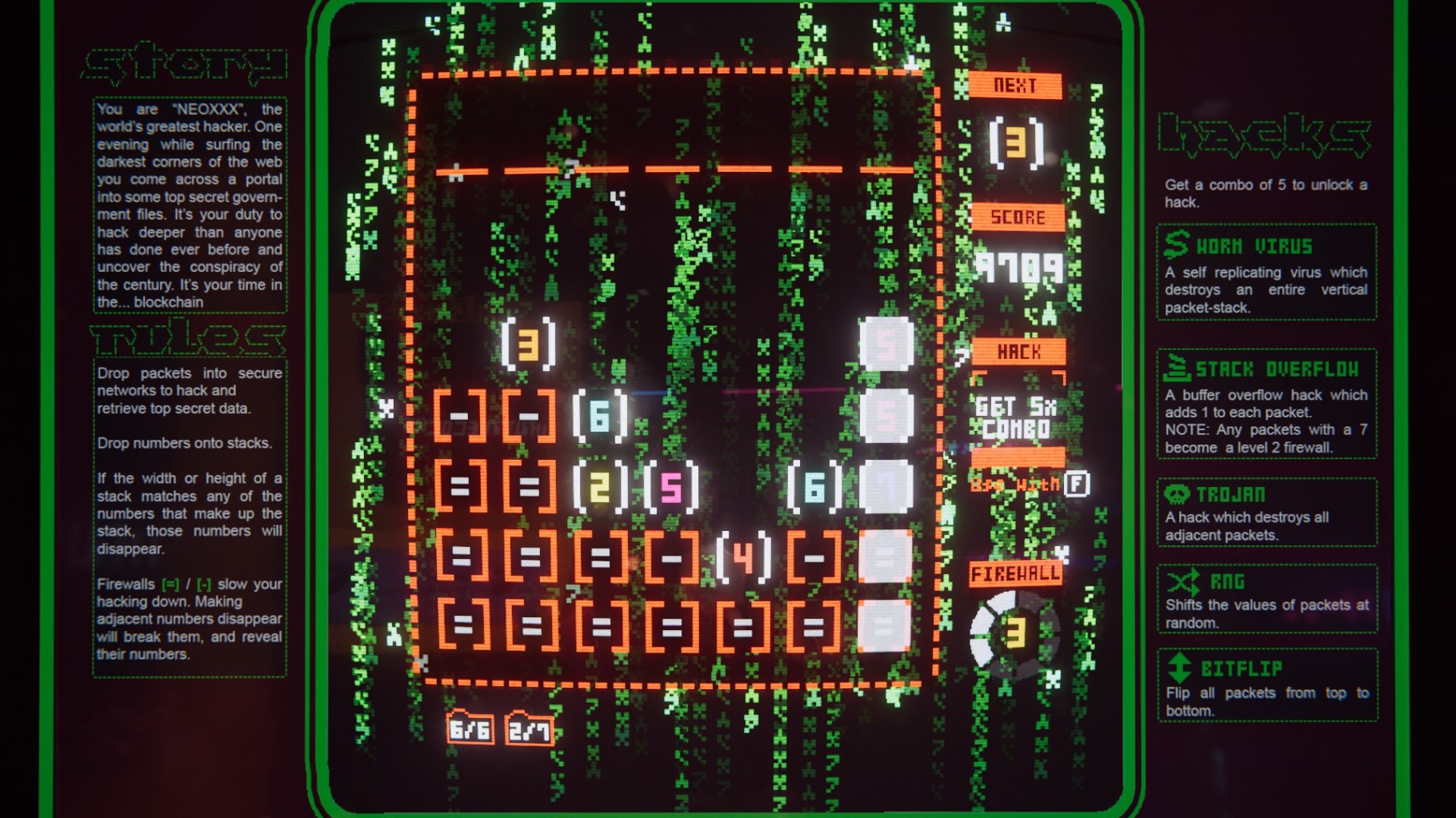
Well, for starters, because playing video games from sunup ’till midnight is kind of at odds with doing the actual work of managing a business.
Particularly with the business of managing a laundromat.
That’s part of the initial appeal of the game, by the way: you’re managing your video arcade on the sly. First it’s just repurposing the storage room into a side-gig, then it’s a gradual ramp-up until that back room becomes its own draw. It’s like a benign underground business, using the boring clothes-washing shop as a front for the real appeal.
But the thing is, the more your arcade expands, the less compelling it is to manage.
Initially, the laundry front of your business is your primary money-maker. You have to be fast with your gaming breaks, polishing off a level in time to catch a clean load of socks and pass it on to the dryer. Satisfy customers with your efficiency, and you can walk away with a clean hundred dollars every couple of hours.
It’s a novel little meta-game that asks you to manage real time as a resource, but takes the pressure off by wholly renewing that resource each day. It asks you to be efficient with your play-time, weaving in a quick five-minute play as a treat between your more real responsibilities. It’s a game about purposeful gaming, if you’d like.
And then the meta-game rapidly becomes irrelevant.
Routine Maintenance
Staying reasonably on-top of things, it took a rough handful of in-game days before the passive income from simply having arcade machines was now outstripping whatever I was making from handling strangers’ undergarments. Seemed a bit soon, but hey – the game isn’t called Laundrette Paradise, after all.
Luckily, at about the same time, I noticed that a more in-depth option set for maximizing the income of every individual arcade machine. Great! Except their money-making power is A: based in part on how much you personally play them, and B: calculated plainly and directly on their info page. If you’re just starting out or have the patience for menu manipularion, it’s utterly trivial to just set each cabinet to the highest projection and then ignore it for weeks at a time until the equations change a smidge.
The business end, in short, is solvable, and Arcade Paradise hands you the answer key.
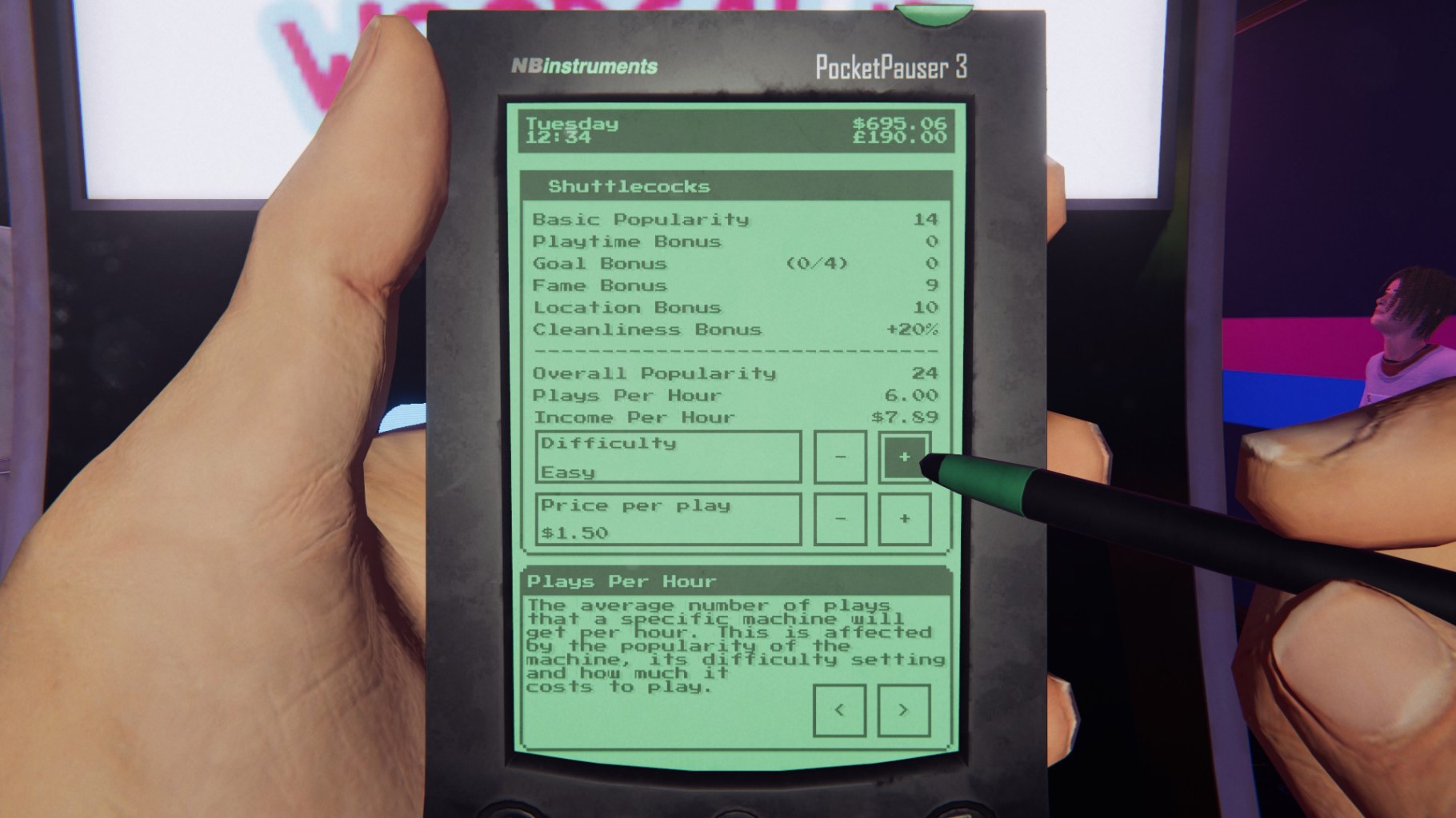
Even this is just a matter of min-maxing, though. For a game ostensibly about managing a business, there’s hardly an element of management – just upkeep.
If this was a Rollercoaster Tycoon, you’d be tasked with hiring employees, covering operational expenses and loan interest, maintaining customer satisfaction levels, and the like. Arcade Paradise rejects half this list outright – your only day-to-day expenses are one-off purchases of new cabinets to strictly upgrade your space. And as to customer satisfaction? Spend five minutes picking up newspapers each morning – patrons apparently only produce trash outside of business hours – and do a quick little mini-game whenever a cabinet or the toilet breaks down.
No managerial thoughts, only video games.
The kicker comes when you unlock daily in-game achievements, most of which revolve around actively playing your suite of in-house cabinets rather than grappling with the business itself. These reward you with a currency to spend in-game on a perks menu, most of which result in…
ah…
reducing how often have to pay attention to the business you’re ostensibly managing.
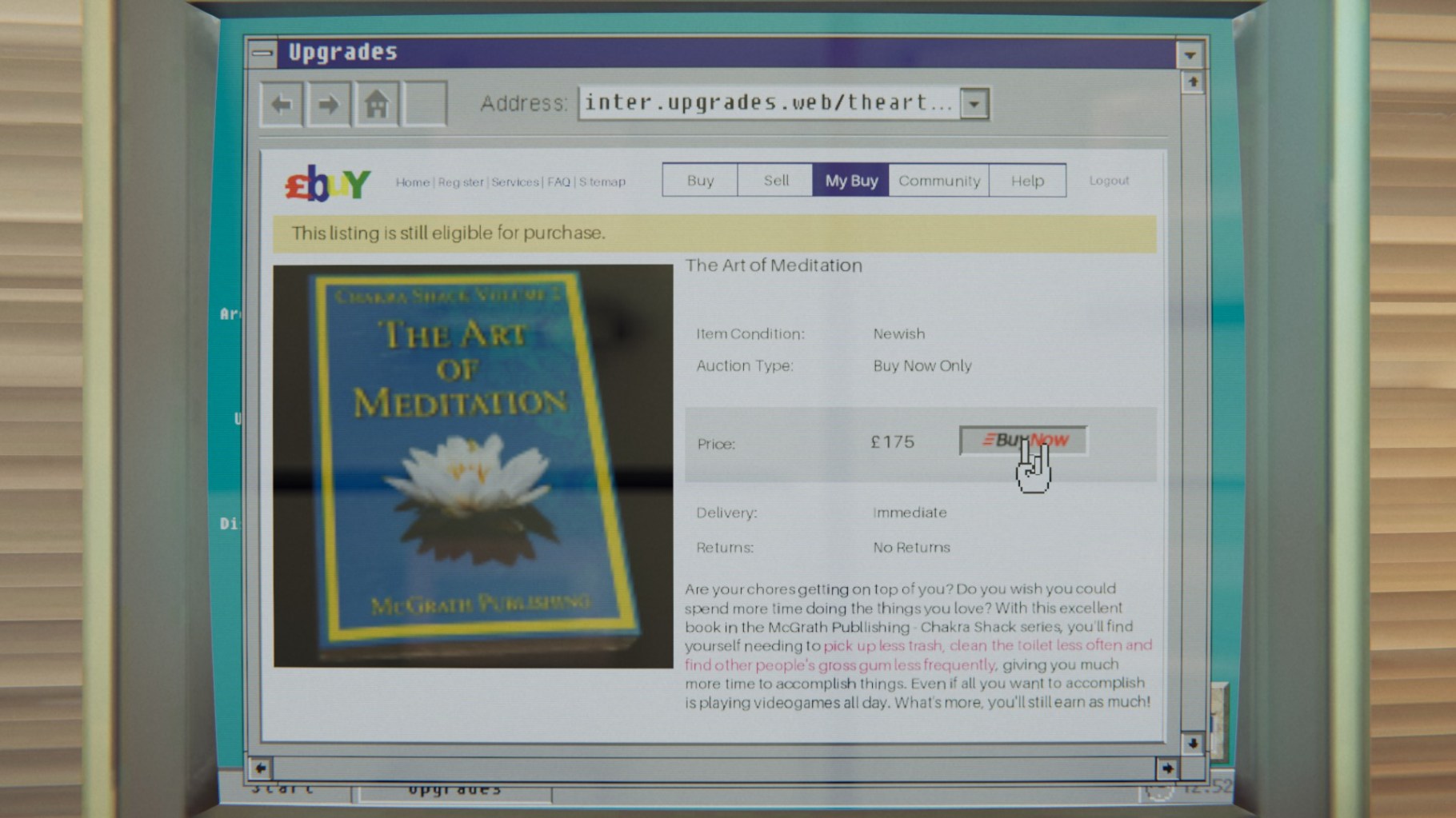
And so, time and time again, Arcade Paradise ends up deleting parts of its original self to achieve the dream of spending all day playing games on the clock.
To wit, the last upgrade on-deck before I retired: a move to halve the footprint the original laundromat business. It got dirtier faster and required more hands-on engagment, and so naturally the game funnels you toward throwing that out.
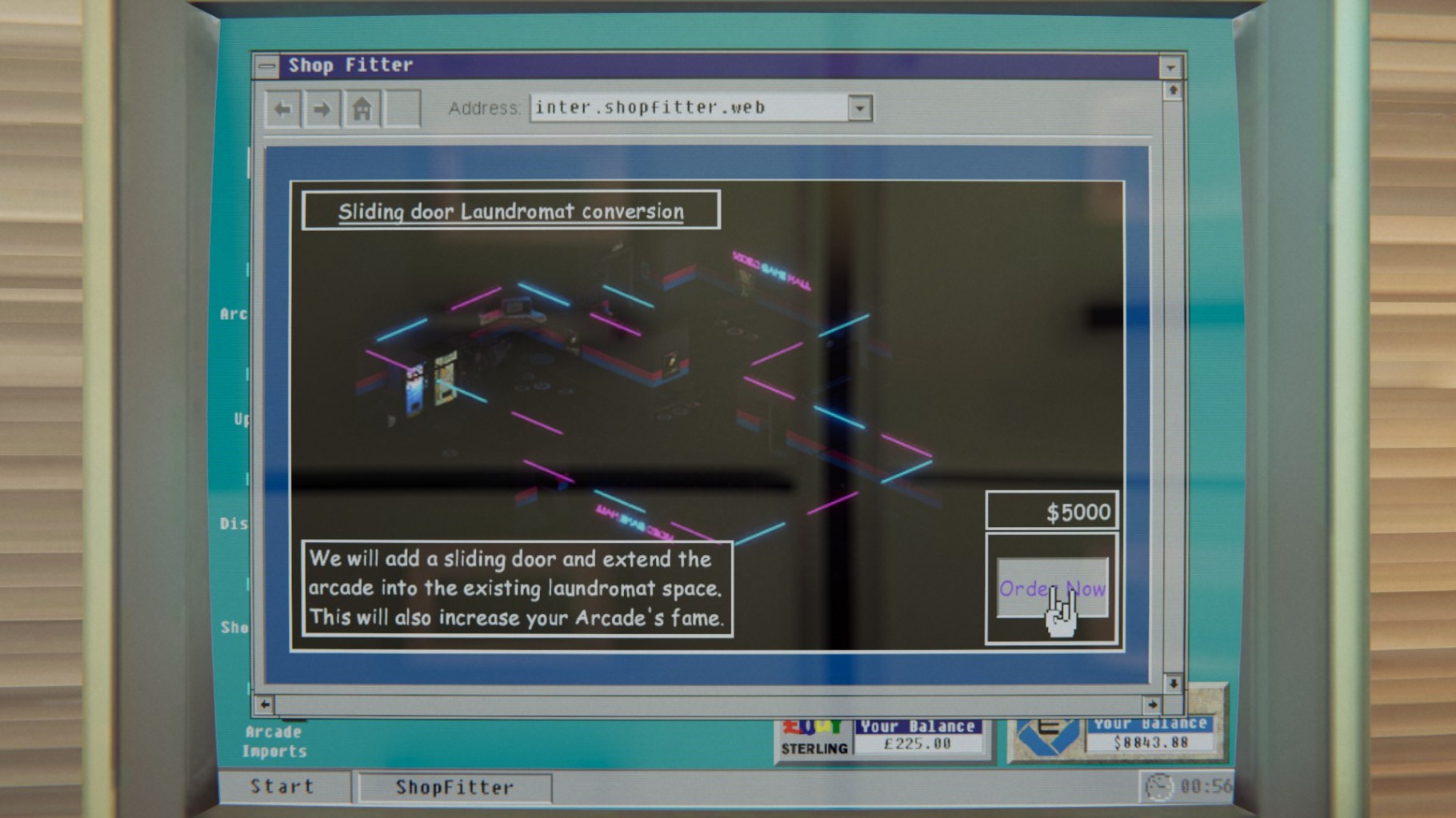
What Would You Say You DO Here?
Here’s where I stop and spot-check that the game and I are even on the same page.
Because, if I take a step back from the genre tags on its various e-shop listings, I get a very different picture of what Arcade Paradise is actually aiming for. Sure, the fact that your ever-expanding arcade floor seems to generate less trash than Ye Olde Laundromat is a subtle little point in the right direction. But more overtly, the only voice representing the business aspect of your supposed business is presumed to be the villain from moment one. Every phone call and message concerned with the dreaded concept of Management is framed with an implicit disdain, defeating the idea of Arcade Paradise as a storefront simulator before it’s entered one ear on its way to leave the other.
The only conclusion here is that Arcade Paradise believes, at some level, that the management gameplay just isn’t compelling. Or, at least, less compelling than playing digital air hockey and match-three puzzle-adventures.
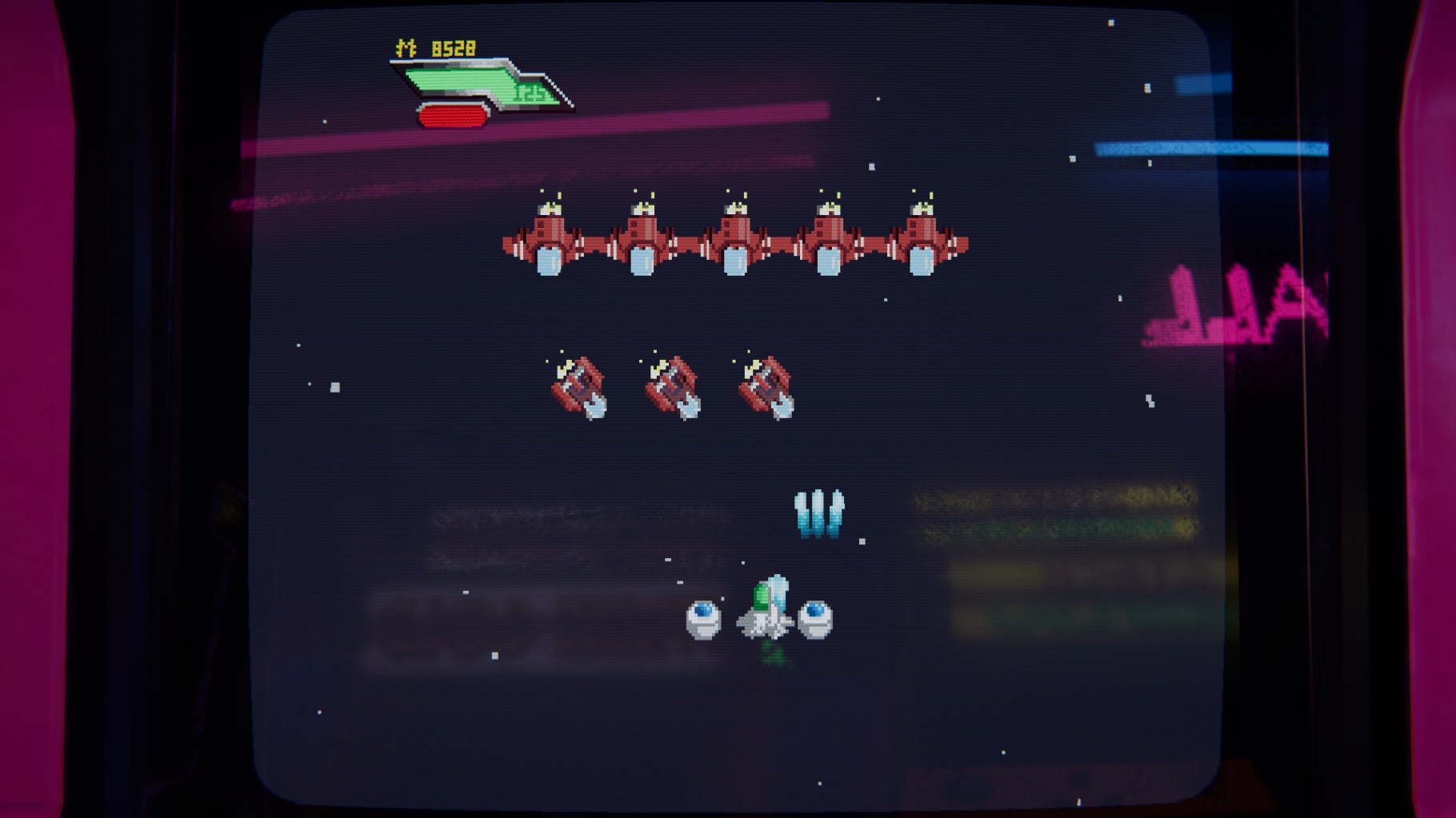
Ultimately, Arcade Paradise is all about the games, and less and less about the Arcade with each additional hour. With no possible fail state, all your job responsibilities mutate into a pesky nagging that drag you away from finally understanding exactly how Blockchain is supposed to work. Management stops being a core imperative of the gameplay loop, and so Arcade Paradise slides over time into becoming a mock-MAME machine a with a skeuomorphic menu and some rate-limiting.
And the thing is: I genuinely enjoy the retro-like game collection that Arcade Paradise is ultimately getting at. Space Race Simulator makes for a fun gradually-progressing take on Outrun. UFO Attack feels right at home sandwiched between Rampage and Space Invaders. Woodland Girl Jr. is so precisely the right amount of “Mario Party minigame” that I feel compelled to keep throwing one more try at it, a dozen times in a row.
Every one of these little games is so polished that I could easily see them manufactured as real cabinets and placed in a brick-and-mortar arcade.
But ultimately the digital framing they’re in just screams that it would rather just be left alone to play another round of Stack Overflow until money makes itself.
Games About Games
Arcade Paradise and I don’t entirely disagree; I can get down to preferring Pac-man to pants-folding. But the thing is, I came to this game under the possibly-mistaken guise of finding joy in both. And the more time I spend with Arcade Paradise, the less I find that it shares my appreciation of cleaning spaces and tamping down task lists.
The best representations of a genre are that most clearly believe in that genre, like a turn-based RPG that celebrates its forebears rather than thumbing its nose at them.
I just wish Arcade Paradise‘s fondness for the Tycoon series or Recettear was as apparent as its adoration of Dance Dance Revolution and Missle Command.
Anyway, I’m gonna go do some laundry now. Sometimes, putting in the honest work is what hits the spot.
 This Thing Is Neat